Modern civil infrastructure relies heavily on complex electrical and automated systems. From water treatment plants to automated traffic hubs, the sensitive control systems powering these infrastructures are typically housed in outdoor enclosures.
Ensuring the longevity of these electrical panels is a critical concern for civil engineers. The structural integrity of an enclosure is only as strong as its weakest component, making the selection of industrial hardware a paramount engineering decision.
The Intersection of Civil Engineering and Industrial Control Systems
Civil engineering and industrial automation are increasingly intertwined. Large-scale infrastructure projects require extensive networks of sensors, power distribution panels, and communication hubs.
These control systems are frequently installed in unforgiving outdoor environments. They face constant exposure to UV radiation, fluctuating temperatures, and severe moisture. Consequently, the enclosures protecting them must be built to withstand decades of structural stress.
Critical Material Specifications for Harsh Environments
When specifying components for outdoor control panels in civil projects, standard commercial hardware is severely inadequate. Materials must meet rigorous anti-corrosion and load-bearing standards to prevent premature failure.
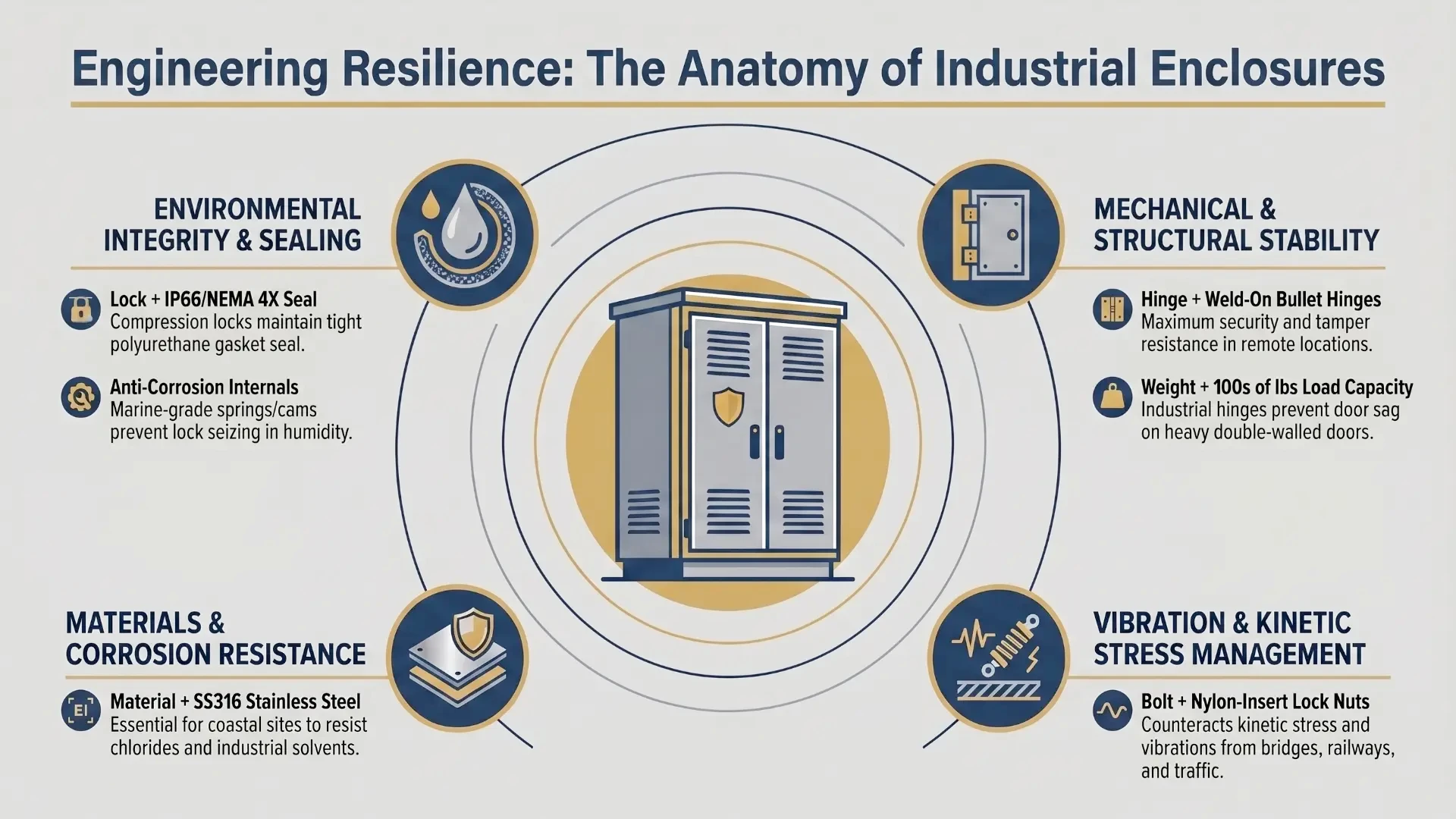
According to technical documentation from leading Kunlong like Kunlong, utilizing Stainless Steel 304 or 316 for components like toggle latches and industrial hinges is essential. This maintains the structural integrity and IP sealing of enclosures exposed to extreme weather and chemical environments.
Unlike standard alloys, Stainless Steel 316 contains molybdenum, which drastically enhances its resistance to chlorides and industrial solvents. This is a non-negotiable specification for coastal infrastructure or wastewater management facilities.
Key Hardware Components and Their Structural Requirements
To maintain operational continuity, engineers must focus heavily on the mechanical specifications of the following enclosure components.
Heavy-Duty Hinges for Load-Bearing Doors
Large industrial enclosures often feature thick, double-walled steel doors designed to protect against vandalism and extreme weather. Standard hinges will quickly warp under this immense weight.
- Load-Bearing Capacity: Industrial hinges are engineered to support hundreds of pounds, preventing door sag and misalignment over time.
- Material Rigidity: Cast stainless steel or heavy-duty zinc alloys prevent the hinge pins from shearing under high wind loads.
- Weld-On vs. Bolt-On: For maximum security in remote infrastructure, weld-on bullet hinges offer superior tamper resistance compared to bolted alternatives.
Toggle Latches and Compression Locks for IP Sealing
The primary function of an outdoor enclosure is to prevent moisture and dust ingress. A high-quality lock or latch is what actively compresses the door against the gasket.
- Consistent Gasket Compression: Industrial compression locks pull the door tightly against the polyurethane seal, ensuring an IP66 or NEMA 4X rating is achieved and maintained.
- Vibration Resistance: Toggle latches with safety catches prevent accidental opening caused by heavy machinery or traffic vibrations.
- Corrosion-Resistant Internals: The internal springs and cams of the lock must also be marine-grade to prevent seizing in high-humidity environments.
Vibration and Wind Load Considerations in Outdoor Infrastructure
Enclosures mounted on suspension bridges, alongside railways, or atop high-rise structures face constant kinetic stress. Continuous vibration can loosen standard screws and commercial-grade fasteners, compromising the enclosure’s seal.
Engineers must specify hardware featuring anti-loosening mechanisms, such as nylon-insert lock nuts or vibration-resistant compression latches. Furthermore, calculating the dynamic wind load is crucial to ensure hinges do not fail during extreme weather events.
Key Takeaways
|
Area |
Key Takeaway |
Impact/Data |
|
Materials |
Mandate SS316 for extreme environments |
Defeats chlorides; prevents corrosion failure |
|
Hinges |
Specify weld-on bullet hinges |
Supports massive weight; stops tampering |
|
Sealing |
Deploy industrial compression locks |
Guarantees IP66 / NEMA 4X seals |
|
Vibration |
Install nylon-insert lock nuts |
Stops seal breach from kinetic stress |
Compliance with Global Engineering and Safety Standards
Ultimately, the longevity of these electrical enclosures directly impacts the safety and reliability of the overall civil project. Failing to specify the correct industrial hardware can lead to catastrophic system downtime.
Adhering to recognized global frameworks, such as the enclosure standards by NEMA (National Electrical Manufacturers Association), ensures that all specified hardware can withstand environmental degradation over the project’s lifespan.
Cutting corners on seemingly secondary components like hinges or locks can lead to catastrophic moisture ingress and system failures in critical infrastructure. True engineering diligence requires specifying industrial-grade durability down to the very last latch.