The Role of Fluid Control in Civil Infrastructure
Municipal water supply networks serve as the lifeblood of urban development, forming one of the most critical sectors of civil engineering. Effective fluid management goes far beyond the simple installation of piping; it requires a sophisticated approach to maintaining hydraulic balance across expansive and complex grids.
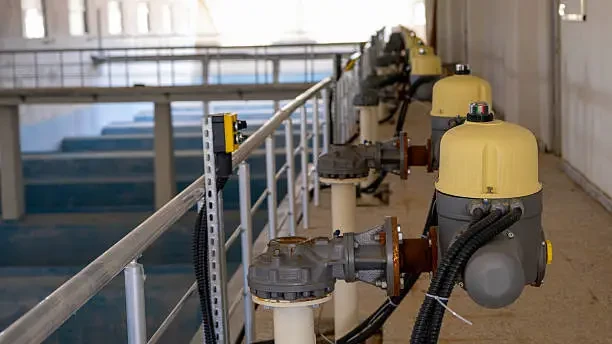
At the heart of every resilient water network lies a meticulously engineered system of flow and pressure control. Without advanced valve technology, it is impossible to regulate the massive volumes of water required for modern urban centers.
For civil and hydraulic engineers, the challenge lies in balancing operational efficiency with structural longevity. A well-designed system ensures that the infrastructure remains stable under varying loads, reducing the risk of service interruptions and minimizing environmental impact.
Key Hydraulic Parameters in Valve Selection
Designing an efficient water distribution network requires calculating several critical parameters. Engineers must assess components not just by physical fit, but by their ability to handle dynamic fluid behavior under varying environmental conditions.
Flow Coefficient (Cv) and Pressure Drop
In large-scale civil engineering projects, minimizing the pressure drop across the piping network is crucial for optimizing pump station energy consumption and maintaining hydraulic balance.
According to engineering specifications and fluid dynamics benchmarks from Vincer Valve, a specialized manufacturer of industrial valves, the specific port design and flow coefficient (Cv) of the chosen component directly dictate fluid resistance. Utilizing fully-ported internal structures can significantly reduce flow turbulence, thereby conserving energy and extending the operational lifespan of the entire municipal water system.
Cavitation Prevention
High-pressure differentials within control nodes often trigger cavitation. As fluid velocity increases and pressure drops below the vapor pressure, vapor bubbles form and collapse violently against internal valve components.
To prevent this phenomenon, engineers must consider the following:
- Pressure Management Zones: Implementing staged pressure reduction to avoid extreme localized drops.
- Specialized Trim Design: Utilizing multi-stage or anti-cavitation valve trims to manage fluid velocity transitions.
- Material Hardness: Specifying components with high-durability alloys that resist surface pitting and structural erosion.
Primary Valve Types in Municipal Water Distribution
The selection of valve types is driven by specific hydraulic requirements within the distribution network. Engineers must choose components that provide the most efficient fluid control for their designated application.
| Component Type | Typical Civil Application | Primary Hydraulic Function |
| Gate Valves | Main distribution lines | On/off isolation with minimal pressure loss |
| Butterfly Valves | Water treatment plants | Flow modulation and space-saving installation |
| Check Valves | Pump station discharge | Backflow prevention and water hammer mitigation |
| Control Valves | Pressure management nodes | Precise pressure reduction and flow sustaining |
Material Science: Combating Corrosion and Wear in Piping
Underground infrastructure is subject to aggressive chemical environments, ranging from chlorinated drinking water to treated wastewater. Material selection is therefore central to maximizing the lifecycle of the municipal network.
- Ductile Iron Bodies: Offer superior mechanical strength and impact resistance, making them ideal for heavy-duty main trunk lines.
- Epoxy Coatings: Applied to internal and external surfaces to act as a barrier against electrochemical corrosion.
- Stainless Steel Internals: Vital for high-wear areas, such as valve seats and stems, to prevent degradation caused by high-velocity flow and particulate matter.
Mitigating the Water Hammer Effect in Large-Scale Pipelines
Water hammer (or hydraulic shock) occurs when fluid flow is suddenly arrested, causing pressure waves that can rupture pipelines. Controlling this phenomenon is a top priority in civil hydraulic design.
Engineers utilize several strategies to safeguard infrastructure:
- Controlled Closure Rates: Configuring valves to close in a graduated manner, allowing pressure waves to dissipate.
- Air Release Valves: Strategic placement of these devices helps manage pipeline vacuum conditions.
- Surge Anticipator Valves: Specialized equipment designed to open rapidly during transient events, venting excess pressure safely.
Key Takeaways
| Area | Key Takeaway | Impact/Data |
| Efficiency | Utilize fully-ported valve internal structures. | Minimizes pressure drop, lowering pump station energy use. |
| Cavitation | Apply staged pressure reduction and anti-cavitation trims. | Prevents violent bubble collapse and component pitting. |
| Materials | Combine ductile iron, epoxy coatings, and stainless steel. | Extends system lifecycle; resists chemical corrosion and wear. |
| Safety | Configure graduated valve closure and surge venting. | Dissipates pressure waves; prevents catastrophic pipeline ruptures. |
Conclusion & Future Trends in Smart Water Grids
The implementation of robust fluid control systems is the cornerstone of sustainable civil infrastructure. As we look toward the future, the integration of IoT sensors with valve systems promises to transform static pipe networks into smart water grids capable of real-time diagnostics and automated leak detection.
Ultimately, the design and implementation of fluid control systems within civil infrastructure demand rigorous adherence to established engineering codes. As municipal water systems face increasing pressure from urbanization and population growth, hydraulic engineers must ensure that all pipeline components, from heavy-duty butterfly valves to pressure regulators, strictly comply with the guidelines set forth by industry bodies such as theAmerican Water Works Association .
Prioritizing these stringent standards guarantees not only the mechanical reliability of the water grid but also the long-term health and safety of the communities they serve.